

Over the past two years, I have:
Grown my LinkedIn audience from 600 followers to almost 38,000
Grown my email list from 1,100 subscribers to over 12,000
And gotten dozens of quality inbound leads from LinkedIn
Along the way, I’ve tried dozens of different growth tactics. But there’s one that’s been responsible for ~80% of all this growth:
LinkedIn lead magnets.
Now, to be completely transparent: they’re not working as well as they used to 12-18 months ago.
Yet, this is still one of the most effective ways to grow your email list on LinkedIn.
However, whenever I explain this to other founders & creators, one of the most questions I get is:
“But how do you come up with SO many lead magnet ideas?”
So in this deep dive, I’m going to walk you through the 7 techniques I use to come up with pre-validated lead magnet ideas that (1) solve real problems for my readers, (2) position you as an expert in your niche, and (3) grow both my audience and my business.
Let’s get into it.
Technique #1: Expand
The first way to come up with viral lead magnet ideas is to look at your best-performing social posts and expand them.
This works because if the idea landed as a social post, it’s very likely to land as a lead magnet.
The idea has already been pre-validated.
That’s how I came up with one of my best-performing LinkedIn lead magnets ever, The Trojan Horse Playbook.
I published a post, and a few weeks later I was in my analytics and noticed it had gotten 4x more engagement than my average post.
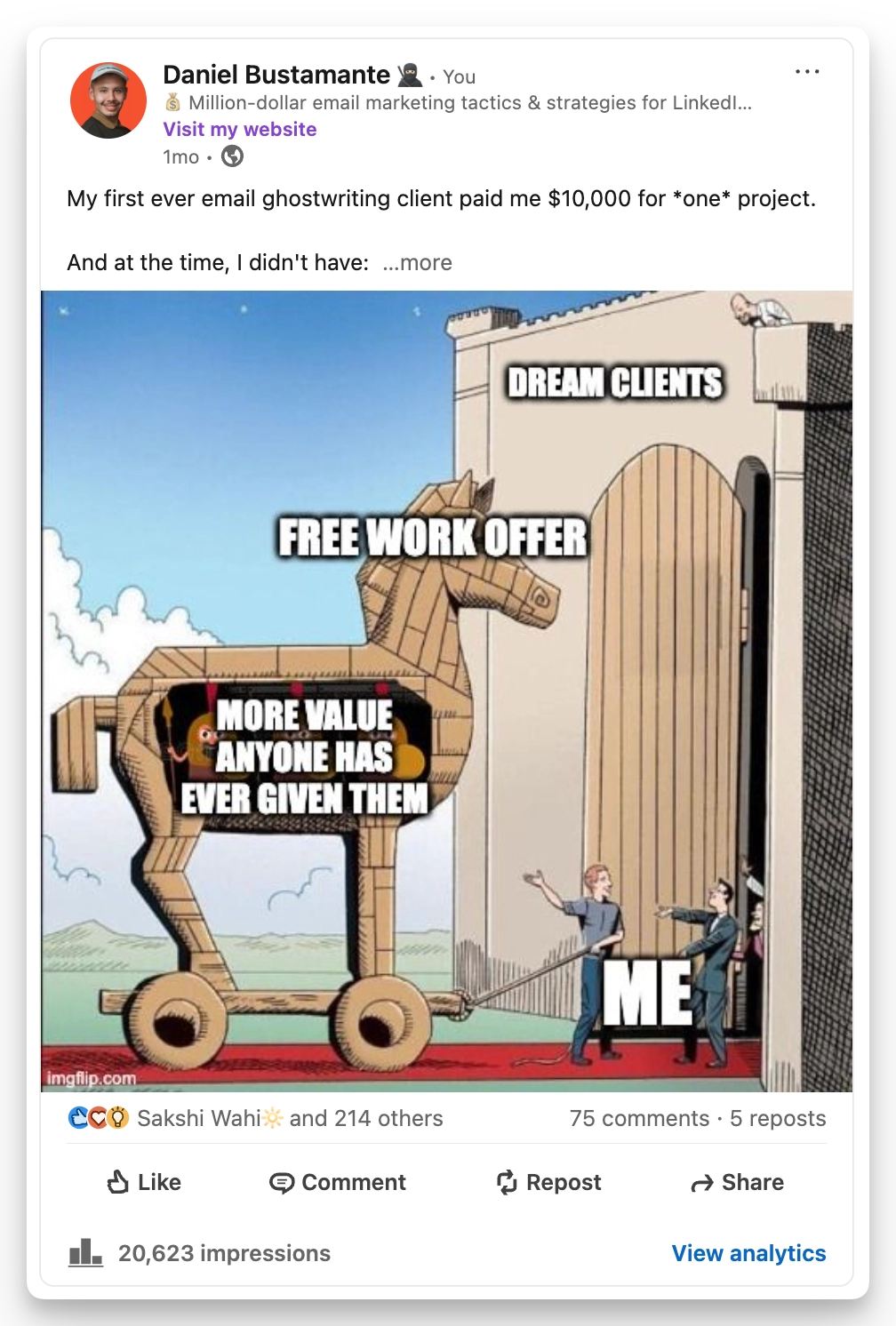
So I re-read it and brainstormed a few ways to make it more valuable:
An AI prompt to streamline the whole process
Images to make it more digestible
Scripts and examples so people could actually implement the frameworks
Then I launched the expanded version as a LinkedIn lead magnet.
It led to 635 new followers in the first 24 hours, 437 new email subscribers, and a landing page that converted at 91.2%.
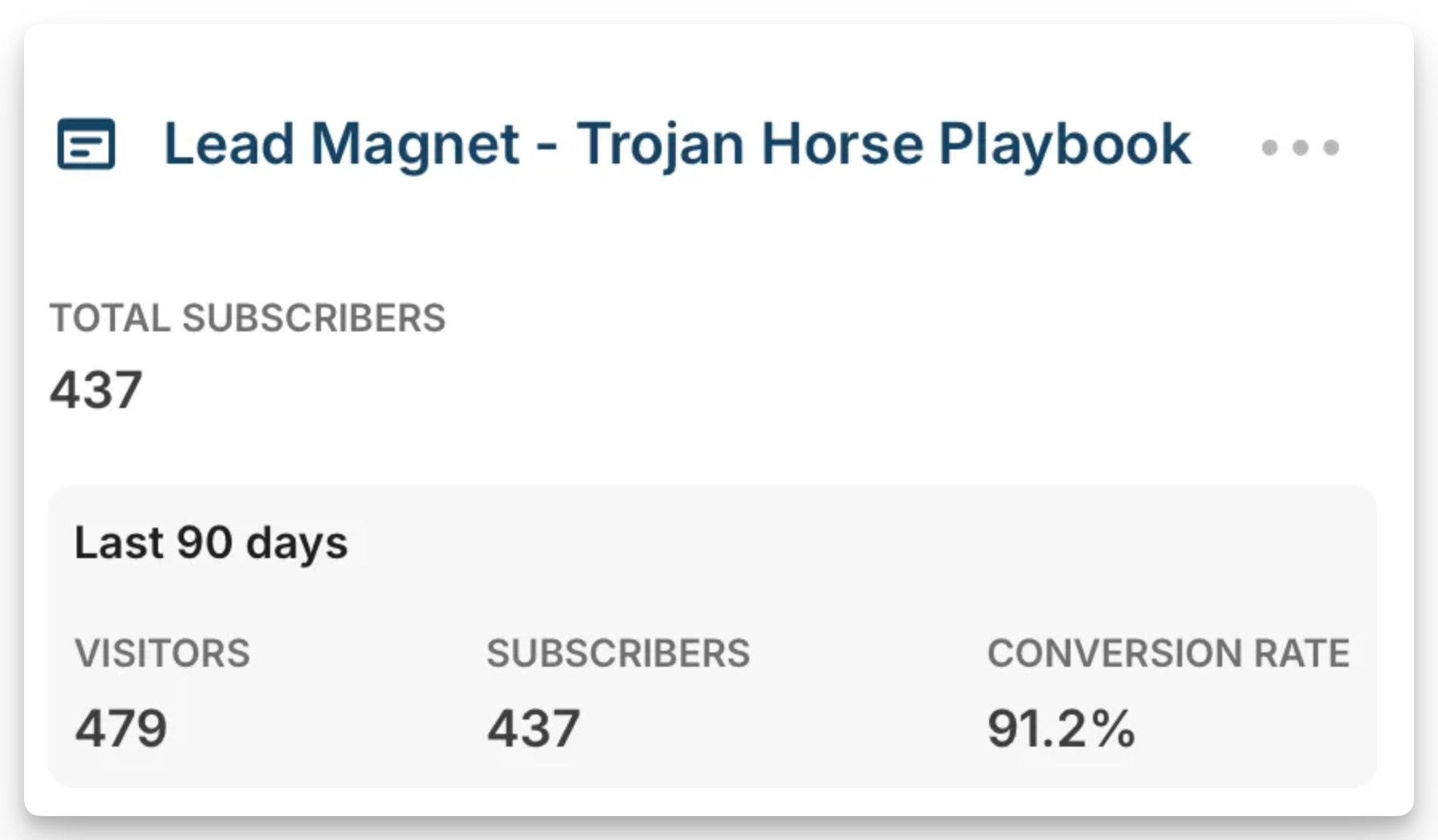
All of it from a post I’d already written.
Technique #2: Compress
The second technique is the reverse: take a valuable, in-depth resource you’ve already created and compress it down.
A paid course, a YouTube video, an internal SOP.
There’s usually a direct correlation between how much time you spent creating something and how valuable it is.
And the same pre-validation logic applies: if a big asset is proven, a smaller version of it will be too.
A while back, I delivered a keynote at a mastermind breaking down our 8-figure PGA funnel, and the feedback from the room told me I’d covered a LOT of valuable frameworks.
So the next day I recorded myself delivering the same presentation at my desk, pulled the transcript, and turned it into an in-depth text breakdown.
Then I launched it as a viral lead magnet on LinkedIn.
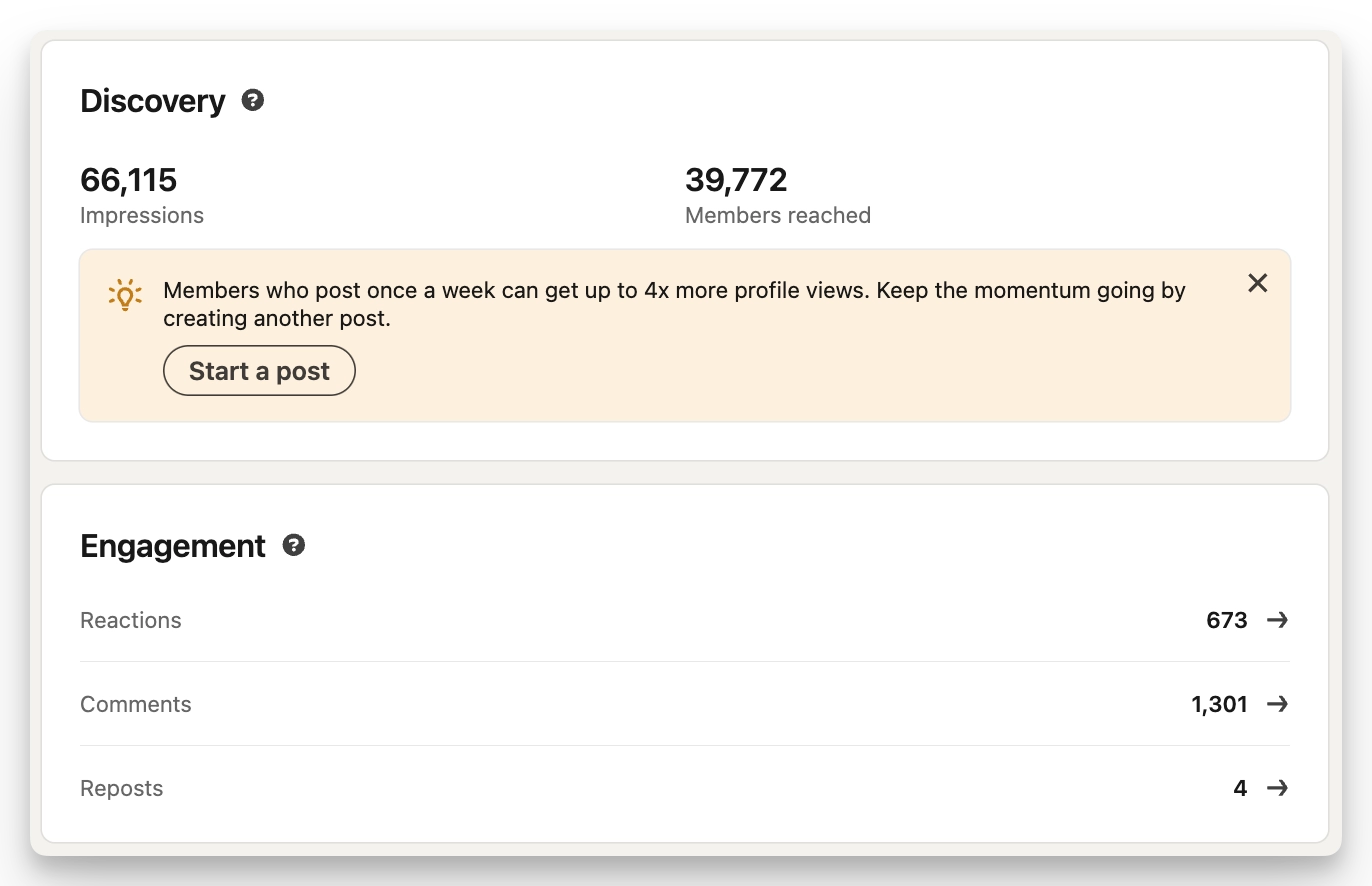
527 new followers in the first 24 hours.
664 new email subscribers.
Plus a handful of high-quality leads reaching out about working together.
Technique #3: Replicate
The third technique is to research creators and businesses in other niches, then replicate their best-performing lead magnets.
Same pre-validation logic as the first two.
The difference is where you’re looking: someone else’s funnel instead of your own library.
Earlier this year I came across Tori Dunlap’s quiz funnel while looking for a creator to feature in my newsletter, and I loved the idea of building something similar for myself.
And here’s the important part.
It’s not just that I liked the idea.
I know it’s very likely to work, because Tori’s quiz funnel has absolutely crushed it for years.

The idea is pre-validated. I just have to execute it properly.
Technique #4: Unbundle
The fourth technique is to unbundle your paid offer.
I really like Alex Hormozi’s idea of a lead magnet being a complete solution to a narrow problem.
Here’s what that means in practice.
Most products and services solve a series of problems for your customer.
So your lead magnet can solve one smaller problem they need to get past before they can even think about the bigger one your paid offer solves.
If your main service helps people sell their house, for example, your lead magnet can help them write a compelling listing so they can get it on the market in the first place.
And if you have a solid paid offer, you’re already solving a lot of these small problems.
You’re just unbundling one of them and giving away the solution.
And by solving that smaller problem for free, you’re saving them time, demonstrating your expertise, and building trust all at once.
So when they’re ready to tackle the big problem, they’re far more likely to buy from you.
Unbundling makes congruence almost automatic, because the free asset comes out of your paid offer by design.
Technique #5: Curate
The fifth technique is to curate existing resources, tools, or examples your audience would find valuable and package them in one place.
This works because your audience is drowning in information.
They don’t need more content.
They need someone to filter the noise and show them what’s actually worth their time.
The best part is how fast these are to build with AI. Usually a day or two.
For example: Last year, I built a swipe file curating some of my favorite newsletter subject lines.
It’s generated more than 1,000 new email subscribers since, with very little promotion.
Technique #6: Analyze
The sixth technique is to analyze your content from the last 90 days and look for patterns in terms of what’s already working.
This sounds like Expand, but there’s an important difference.
With Expand, you’re doubling down on a single post that’s an obvious winner.
With Analyze, you’re looking across all your stats for macro trends that point toward a bigger asset you could create.
A few months ago I went through my numbers and realized my posts about Substack were getting a lot of signal.
So I asked myself what bigger, more comprehensive asset I could build in that vein.
That’s where my Substack Traffic Arbitrage lead magnet came from.
But it wasn’t a specific post that triggered it.
The pattern did.
Technique #7: Content Series
The seventh technique is to run a 30-day content series, publish it daily, and then compile it into a lead magnet at the end.
This works because you’re building a compounding content flywheel.
Each day in the series becomes a social post, a newsletter, and a piece of the final asset.
It also kills what I call the Daily Content Roulette, where every morning you wake up wondering what to post.
You know what you’re publishing, your audience knows what to expect, and every piece builds on the last.
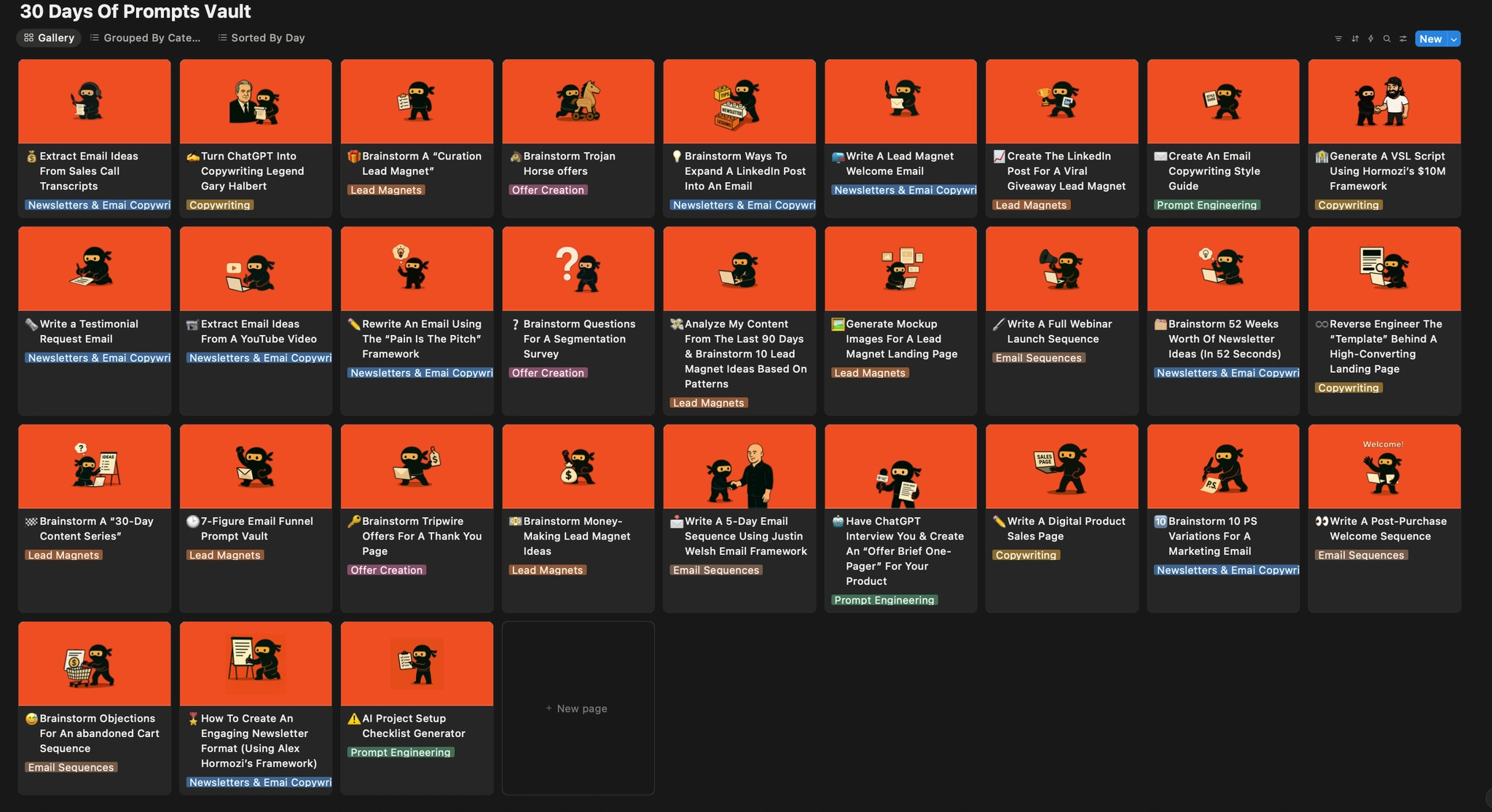
Example: Back in June 2025, I posted 30 AI marketing prompts in 30 days.
By the end, I had a library of prompts, a month worth of data points, hundreds of new subscribers, and a beefy lead magnet waiting to be packaged up.
Wrapping Up
Look back at the 7 techniques and you’ll notice they all do the same thing:
Find ways to double down on something that’s already been proven - in your own content, in someone else’s funnel, or in your paid offer.
That’s the whole game. The more you can reduce the risk of your lead magnets flipping, the better.
Anyway, hope this was helpful!
And if it was, please:
Leave a comment letting me know which technique you’re using first
Share this with a friend or colleague who could find it helpful as well
Until next week,
Daniel
PS - I created a series of Claude Skills to make it 10x easier to implement each of the 7 techniques in this deep dive. Want to check them out? Let me know in the comments and I’ll send them for free.
PPS - Enjoyed this piece? Then you’re going to love my newsletter, Daily Email Tactics.
Every day, I send a hyper short (and hyper actionable) email breaking down a tactic to help you grow or monetize your email list.
Please, send me these skills, Daniel.
Send the prompts!