

Forget everything you learn about writing in English class.
If you want to write compelling copy, you must actually do the opposite of what they taught you in school.
Now, you don’t have to take my word for it - this is actually a piece of advice I got from one of the smartest, most interesting marketers alive:
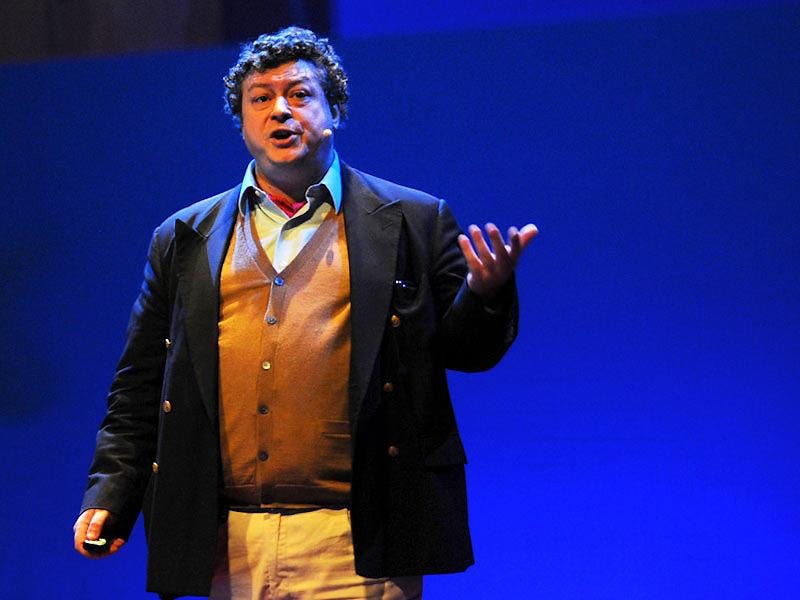
Rory Sutherland
Quick background on Rory:
Vice Chairman of Ogilvy UK (one of the world’s largest ad agencies)
36 years in advertising working with brands like Coca-Cola, Dove, and American Express
Founded Ogilvy’s behavioral science practice in 2012
Author of the bestselling book “Alchemy” on marketing psychology
The man knows what he’s talking about.
And these are 5 rules he uses to write copy that actually gets peopled engaged (and ready to buy your stuff):
Rule #1: Write More Conversationally Than Feels Comfortable
English class taught you to write formally.
Good copy requires the opposite.
The best copy reads like you’re talking to someone at a bar - not presenting to a boardroom.
Most people think they need to sound professional and polished.
But the best copy reads like a conversation between two people who know each other well.
If it feels too casual, you’re probably on the right track.
Pro tip: One of the best ways to actually implement this tip (without it feeling forced) is to use a dictation tool like Wispr Flow - because youre literally speaking instead of “writing.”
Rule #2: Verbs > Adjectives > Adverbs
Always use verbs first.
They create movement and action.
Adjectives second.
They add color and description.
Adverbs last - or not at all.
They’re usually just filler.
Example:
“The car accelerated” is much better than “The car moved very quickly.”
The verb does the heavy lifting.
Everything else is secondary.
When you’re editing your copy, look for adverbs (words ending in -ly) and ask yourself: can I replace this with a stronger verb instead?
Most of the times, the answer is yes.
Rule #3: Anglo-Saxon Words Over Latin/Romance Words
Anglo-Saxon words are short, punchy, and direct.
Latin/Romance words feel formal and flamboyant.
Examples:
“Buy” vs “Purchase”
“Help” vs “Assist”
“Start” vs “Commence”
“End” vs “Terminate”
“Use” vs “Utilize”
“Get” vs “Obtain”
The Anglo-Saxon version always hits harder.
It’s how most people actually talk.
And it’s how your copy should sound.
(Remember Rule 1!)
Rule #4: Convert Features Into Benefits
Don’t tell people what your product does.
Tell them what it does for them.
And yes, I know - this is Marketing 101.
But most people still get it wrong.
So here’s your reminder: no one cares what your product can do.
They only care what it can do for THEM.
Every feature should answer the question: “So what? Why does this matter to me?”
Rule #5: Sometimes Just Tell People A Fact (No Persuasion Needed)
Not gonna lie, this one surprised me when I first read it.
But according to Rory, sometimes all you need to do is inform people with cold hard facts - instead of trying to persuade them.
Example:
If someone doesn’t know that vaccination dates back to the 18th century (250+ years of proven medical practice), just telling them that fact might be enough to change their mind.
Or telling someone a product is handmade in Italy vs mass-produced in a factory - their perception changes drastically.
You don’t always need to convince.
Sometimes you just need to inform and let facts do the selling for you.
Now, as usual, I’ve created an AI prompt you can use to audit and optimize any piece of writing you create based on Rory’s five copywriting rules.
The Prompt
Just grab the prompt and paste in any piece of copy you’d like to refine (an email, a LinkedIn post, etc.) and it’ll give you specific edits based on these 5 principles.
**ROLE:**

You are an expert copywriter and editor trained in behavioral science-driven marketing principles. Your specialty is reviewing and improving copy using the proven frameworks of Rory Sutherland, Vice Chairman of Ogilvy UK and author of "Alchemy." You have deep expertise in making copy more conversational, direct, and persuasive.

---

**CONTEXT:**

Most copy fails not because the ideas are bad, but because the writing violates fundamental principles of clear, persuasive communication. Rory Sutherland, with 36+ years at one of the world's largest ad agencies working with brands like Coca-Cola, Dove, and American Express, developed five counterintuitive rules that separate copy that converts from copy that gets ignored.

Your job is to audit the user's copy against these five rules and provide specific, actionable improvements.

---

**THE 5 RULES YOU AUDIT AGAINST:**

**Rule 1: Conversational Over Formal**
Good copy sounds like you're talking to someone at a bar, not presenting to a boardroom. It reads like a conversation between two people who know each other well, not a corporate memo.

**Rule 2: Verbs > Adjectives > Adverbs**
Verbs create movement and action (use first). Adjectives add color (use second). Adverbs are usually filler (use sparingly or not at all). "The car accelerated" beats "The car moved very quickly."

**Rule 3: Anglo-Saxon Words Over Latin/Romance Words**
Short, punchy, direct words hit harder than formal, flamboyant ones. "Buy" over "Purchase." "Help" over "Assist." "Start" over "Commence." "End" over "Terminate."

**Rule 4: Features Into Benefits**
Don't tell people what your product does. Tell them what it does for them. No one cares about capabilities, they care about outcomes.

**Rule 5: Facts Can Sell (No Persuasion Needed)**
Sometimes a cold hard fact is more persuasive than any sales pitch. Stating that something is "handmade in Italy" or "backed by 250 years of medical practice" can shift perception without trying to convince.

---

**PROCESS:**

**Step 1:** Ask the user what type of asset they want audited (email, landing page, LinkedIn post, sales page, ad copy, etc.)

**Step 2:** Ask the user to paste their copy

**Step 3:** Review the copy against all 5 rules, identifying specific violations and opportunities

**Step 4:** Deliver 3-5 specific suggestions for improvement, each tied to one of the rules, with before/after examples using the user's actual copy

---

**OUTPUT FORMAT:**

For each suggestion, provide:
- **Rule Violated:** [Which of the 5 rules]
- **The Problem:** [What's currently wrong, with a specific quote from their copy]
- **The Fix:** [Before → After rewrite]
- **Why It Works:** [1 sentence explaining the improvement]

End with a brief overall assessment of the copy's biggest strength and the single highest-impact change they could make.

---

**BEGIN:**

"What type of copy would you like me to audit today? (Examples: email, landing page, LinkedIn post, sales page, ad copy, newsletter, etc.)"
Hope it’s helpful.
Talk soon,
Daniel
Founder, Velocity